
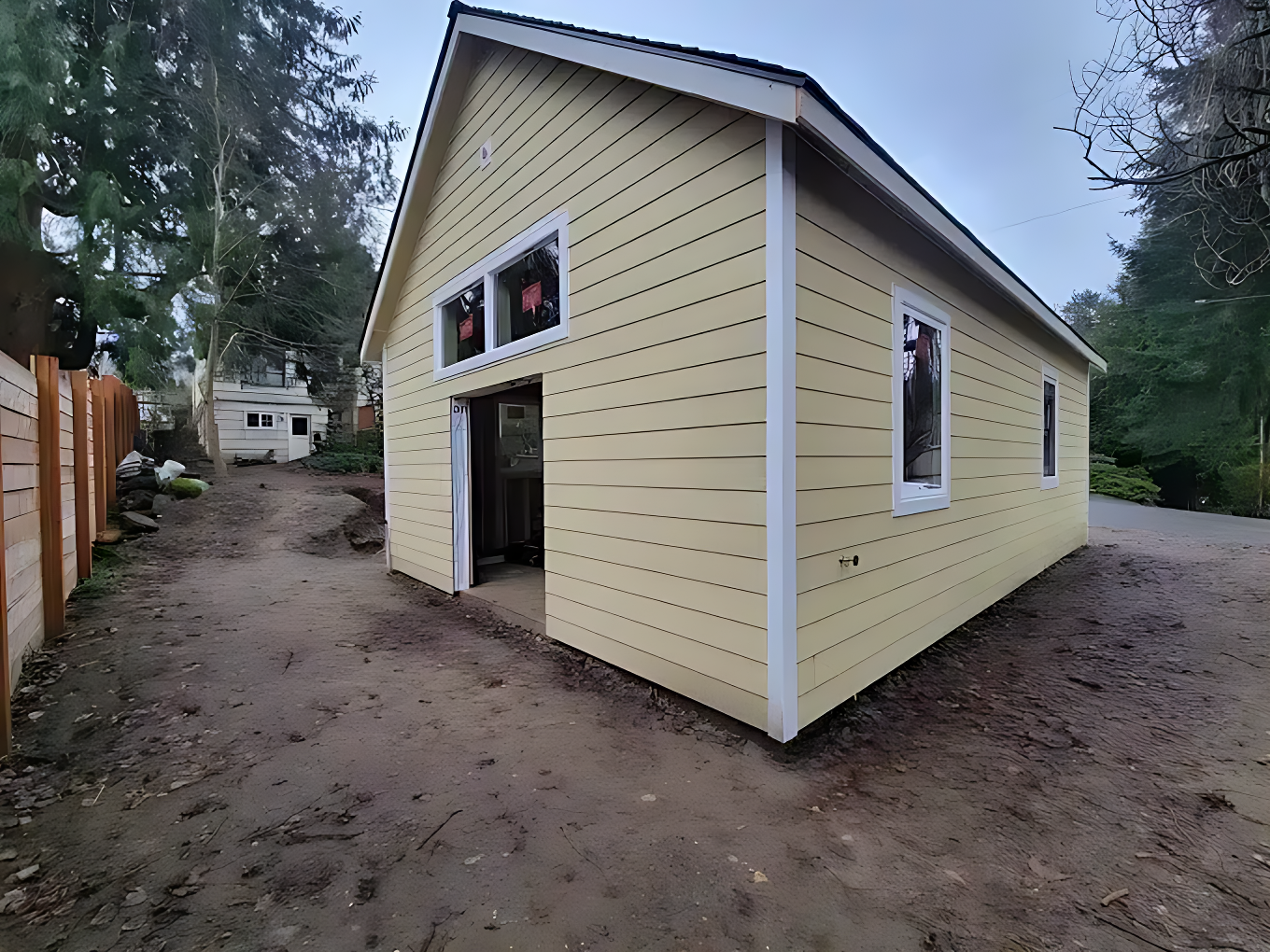
Choose an AADU when you want a separate living unit within your home. Choose a DADU when you want a detached home on the same property and have space for one. Consider a garage conversion when an existing garage could serve your needs—but remember, a garage conversion is a way to reuse a building, not a separate ADU type. If the finished space is a permitted dwelling, an attached garage conversion may be an AADU and a detached garage conversion may be a DADU. The right option depends on who will use the space, how much independence they need, what your property can support, and how much change you’re ready to take on. Option What it is Often suits homeowners who… Main trade-off AADU A permitted living unit within the main home Want to use existing interior space and preserve most of the yard The unit shares the home’s structure, so layout, access, light, and privacy matter DADU A permitted living unit in a separate building on the same property Prioritize separation and independent access Uses yard space and requires planning for site access, construction, and utilities Garage conversion Remodeling an existing garage for a new use, from a flex room to a dwelling unit Have an underused garage that may be practical to adapt The structure may need substantial work; a room conversion is not automatically an ADU What’s the difference between an AADU, DADU, and garage conversion? Seattle defines an accessory dwelling unit (ADU) as a separate living space within a home or elsewhere on the same property. The City calls a permitted unit within the main home an attached accessory dwelling unit (AADU) and a permitted unit outside the main home a detached accessory dwelling unit (DADU). ADUs must be established through the permit process to be legal.Seattle’s ADU guidance A garage conversion describes the construction approach, not the legal type of unit. A garage can become an office, workshop, studio, or other flexible space. If the goal is a separate dwelling, the project needs to meet the requirements for an ADU and receive the appropriate permits. When an AADU may be the better fit An AADU creates a separate living space within the existing home. A basement or lower level may offer a starting point, especially when you want room for a family member, caregiver, guest, or tenant without adding a new building to the yard. Using existing interior space can preserve more outdoor area, but it doesn’t guarantee a simple project. The layout, ceiling height, access, natural light, ventilation, moisture conditions, utilities, and privacy all affect whether the space can work well as an independent home. Stairs and sound between units may also matter to the future occupant. Seattle requires a construction addition or alteration permit to add an ADU within an existing home. The unit must meet applicable city requirements, which may include building, mechanical, electrical, energy, and land-use standards.Seattle’s ADU guidance Explore AmyWorks’ ADU services or basement remodeling if you’re considering an interior project. When a DADU may be the better fit A DADU is a separate home on the same property as the main house. Its physical separation can make it a good option when privacy and independent access are priorities—for example, for a relative who wants their own space or for a household considering a future rental. A detached unit affects more than the building footprint. Consider how it will fit on the lot, how people and construction crews will reach it, how it relates to neighboring properties, and what utility connections the project may need. Seattle’s rules and permit requirements depend on the property and the proposed work, so assess site conditions before settling on a design. Seattle’s ADUniverse offers a property-feasibility tool and a gallery of pre-approved DADU plans. The City says pre-approved plans can make permitting more predictable and that, in most cases, permits may be issued in 2–6 weeks. That refers to the permit process—not the entire design and construction timeline—and site-specific requirements still apply.Seattle SDCI’s ADU guidance See AmyWorks’ DADU services to learn more about detached-unit projects. When a garage conversion may be the better fit A garage conversion starts with a structure you already have. Depending on your needs, the finished space could be an office, gym, studio, workshop, guest area, or part of a plan for a separate dwelling. The intended use shapes the scope. An office or hobby room is different from an independent unit with its own living facilities. Before planning a conversion, look at the garage’s structure and slab, moisture conditions, insulation, lighting, windows, ventilation, heating, electrical system, and plumbing needs. If the garage is detached, connecting utilities may add work and complexity. You’ll also be giving up some or all of the space’s current use for parking or storage. The City’s permit path depends on the project and site. Some garage work may qualify for a subject-to-field-inspection permit; other projects require an addition or alteration permit. Creating an ADU requires a construction permit, and separate electrical or plumbing permits may also be needed.Seattle’s garage permit guidance Seattle’s ADU guidance Learn more about AmyWorks’ garage remodeling services. Choose the intended use before the construction type Start by picturing the person who will use the space and what their daily life will require. A phased plan can help keep options open, but it should be grounded in the property’s conditions and the intended future use. Seattle provides tools to research a property and its permit history; a site-specific conversation can help identify questions to resolve before design work advances. Frequently asked questions Is a garage conversion automatically an ADU? No. A garage conversion can create a flexible room without creating a dwelling unit. It is an ADU only when the project establishes a separate living space that meets the applicable requirements and is permitted. An attached garage conversion may be an AADU; a detached garage conversion may be a DADU. Which option usually costs less? There is no reliable answer without